Picture this: It’3:00 AM. You’re doom-scrolling on your phone, half-asleep, when you accidentally click a sketchy link. Instantly, your banking app locks you out. Your email floods with password reset requests. Your smart fridge starts ordering 500 pounds of mayonnaise. In a panic, you try to log into your crypto wallet, only to find it drained faster than a bathtub in a horror movie.
This isn’t just a nightmare; it’s the reality we might face if we don't start paying attention to the ticking time bomb in the physics lab. We’re standing on the edge of a revolution, and most people are looking the wrong way.
I’ve spent countless hours reading academic papers and white papers until my eyes bled, trying to decipher the hype from the reality. Let’s be honest: the "quantum" space is full of buzzwords and over-promises. But the underlying threat—and the subsequent salvation—is very, very real.
Here’s the truth: The very fabric of our digital security is about to be shredded. But don't panic. The same science that threatens to break the internet holds the key to rebuilding it in a way that is paradoxically unhackable.
Let’s talk about the elephant in the room—the Shor’s algorithm.
The Cryptographic Ticking Bomb
We need to talk about why your passwords are safe today but not tomorrow.
Most of the internet’s security relies on a simple concept: it’s really hard to multiply two massive prime numbers together, but it’s nearly impossible to do the reverse—to take that massive product and figure out which two primes created it. Classical computers would take billions of years to crack a 2048-bit RSA encryption key. It’s the mathematical equivalent of trying to find two specific haystacks in a galaxy made entirely of hay.
But a quantum computer doesn't play by those rules. It uses "qubits"—particles that can exist in multiple states at once (superposition). This allows them to explore every possible solution simultaneously.
In 1994, mathematician Peter Shor wrote an algorithm that could theoretically factor huge numbers using a quantum computer. For decades, it was a theoretical parlor trick because we didn't have machines powerful enough to run it.
That is changing—faster than you think.
I’ve seen experts in the field go quiet when asked about timeline estimates. The "Y2Q" (Years to Quantum) countdown clock is ticking. When we hit a machine with enough stable qubits, every TLS handshake, every HTTPS connection, every VPN tunnel—they all become open books. The magic trick of the internet’s security is revealed to be a cheap illusion. This isn’t just about your email password; it’s about state secrets, infrastructure control systems, and the entire global financial settlement layer.
"Harvest Now, Decrypt Later": The Silent Heist
Here’s what most people miss. The attack isn't waiting for the quantum computer to be built.
This is the part that keeps me up at night.
We are currently in the "Harvest Now, Decrypt Later" era. Sophisticated adversaries—think nation-states and organized cyber syndicates—are already intercepting and storing encrypted data. Your tax returns, your health records, your private corporate communications... they are being siphoned off and stored in vast digital vaults.
They aren't trying to read them now. They are waiting. When the first viable quantum computer comes online, they will hit "Enter" on those archives, and the floodgates will open.
I’ve found that most security professionals are less worried about the "day of the attack" and more worried about the "day of the retroactive leak." We are sending our most intimate digital secrets into the future, completely unprotected. It’s like mailing postcards of your house keys to a stranger, hoping they lose them before they get a locksmith.
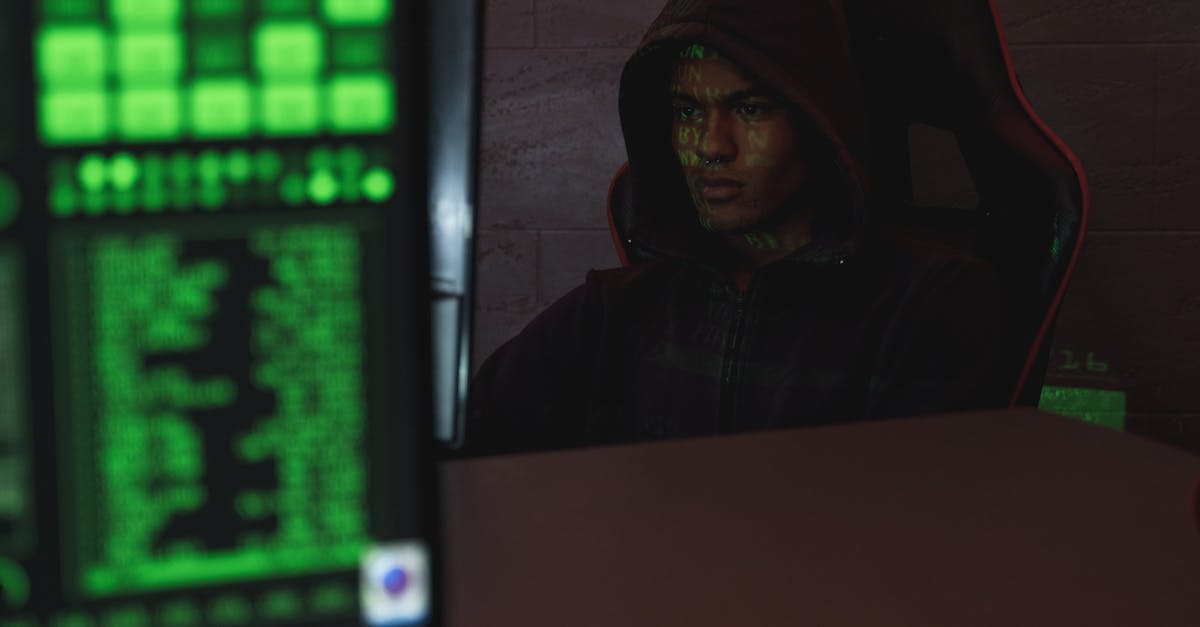
Why the "Fix" Feels Like Science Fiction
So, how do we fix a problem that requires us to defend against an attacker using physics we barely understand? We fight fire with fire.
The solution isn't just "longer passwords." That’s like trying to stop a tsunami by raising the beach slightly. We need a fundamental shift in how we encrypt data. This is where the story takes a turn from horror to heroics. Enter Quantum Key Distribution (QKD) .
Forget the complex math. QKD uses the physical properties of photons (light particles) to send encryption keys.
Here’s the mind-bending part: In quantum mechanics, the act of observing something changes it.
If a hacker tries to intercept the photon carrying your encryption key, they inevitably alter its state. They can't copy it without destroying it. It’s like sending a sealed envelope with a magic string attached—if anyone even touches the string, it breaks, and you instantly know you’ve been compromised.
This isn't a theory anymore. We’ve successfully beamed encrypted data between satellites over distances that were impossible just a few years ago. The fix isn't just better code; it's a physical law of the universe telling the hacker, "Nice try, but you can't look without breaking it."
The Post-Quantum Shift (It's More Boring Than You Think)
But let’s be realistic. We aren't going to replace the entire internet’s infrastructure with lasers and satellites by next Tuesday. The transition will be messy, bureaucratic, and—dare I say—a little bit boring.
Before the quantum era fully hits, we need Post-Quantum Cryptography (PQC) . These are new, wildly complex mathematical problems that are believed to be difficult for both classical and quantum computers to solve.
In my opinion, this is the most critical—and least flashy—part of the puzzle. We need to update the firmware of the world.
The 3 Steps to Survive the Leap
If you are a developer, a CTO, or just a digital citizen who doesn't want their identity stolen, here is your roadmap. This isn't a drill.
- Take a Crypto Inventory: You can’t protect what you don’t know exists. Go through your systems and find every instance of RSA, ECC, and Diffie-Hellman. It’s scary how many legacy systems are still running on 1990s encryption.
- Adopt "Crypto Agility": Stop hard-coding algorithms. Build your infrastructure to swap out encryption methods on the fly. When the NIST standards for PQC are fully finalized (which is happening now), you need to be able to plug them in without rewriting your entire architecture.
- Stop Sending "Harvestable" Secrets: Assume your current encryption will be broken in 2030. Ask yourself: If this data was leaked in 10 years, would it ruin me? If yes, get it off the wire or protect it with a hybrid approach immediately.

The Quantum Paradox
I’ve often joked that quantum mechanics is just the universe’s way of saying, "I don't like being spied on." The irony is delicious.
We built the internet on the idea that "hiding" information is possible through complex math. But math is just a language; eventually, someone learns to speak it fluently enough to translate your secrets.
Quantum brings us back to a more primal form of security. It doesn't rely on how smart the code-breaker is; it relies on the fundamental rule that you cannot look without touching.
The internet is going to break. But when we rebuild it, we aren't just patching a hole. We are upgrading from a wooden door to a force field.
We are moving from a world of trust-based security to a world of physics-based security. That is a future I am genuinely excited about, even if the transition terrifies me.
The countdown has started. The question isn't if the quantum leap will happen—it already has. The only question left is whether you are still sending postcards of your house keys, or if you’re ready to build the unbreakable vault.
Are you prepared for the reset?
